
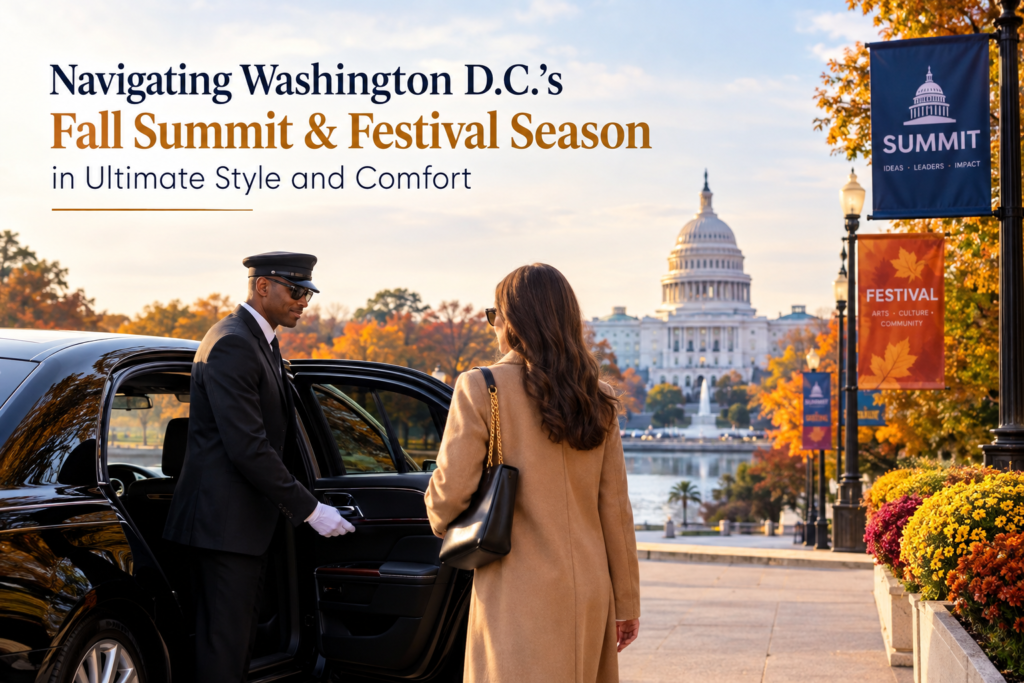
Fall is a busy and enjoyable time to explore Washington, DC, with festivals, cultural events, sports, theater, conferences, and seasonal attractions taking place across the city. The best Washington DC fall events transportation tips are simple: plan your route before the event, allow extra travel time, check event-day road restrictions, choose transportation based on group size and schedule, and keep your return journey in mind.
For visitors attending a summit, business meeting, festival, concert, or sightseeing trip, transportation planning can make the difference between a rushed day and a comfortable one. DC Luxury Limo can be part of that planning for travelers who want private transportation between airports, hotels, meetings, venues, and other destinations.
What are the best Washington DC fall events transportation tips?
The most useful tips are to:
- Check the event date, venue, and expected attendance.
- Plan transportation before leaving your hotel or meeting.
- Allow additional time for traffic and pedestrian activity.
- Check Metro and road conditions before traveling.
- Identify designated pickup and drop-off locations.
- Avoid scheduling multiple activities too close together.
- Keep weather and walking conditions in mind.
- Plan both arrival and departure transportation.
Fall brings a wide variety of activities to the District. Destination DC’s current fall listings include festivals, theater, sports, cultural programs, food events, and other activities across September, October, and November.
Why is fall a busy season in Washington, DC?
Autumn combines comfortable sightseeing weather with a full event calendar. Visitors can experience changing foliage, museums, outdoor activities, sports, theater, neighborhood festivals, and seasonal celebrations.
Destination DC describes fall as a season with events ranging from food and music celebrations to cultural activities and family-friendly experiences.
The schedule can also spread visitors across different parts of the metropolitan area. One event may be near the National Mall while another takes place in Georgetown, the Wharf, Capitol Hill, Arlington, or Northern Virginia.
That makes location-based transportation planning important.
What makes event transportation different?
Normal sightseeing allows travelers to change plans easily. An event usually has a fixed start time.
Missing a museum opening is different from arriving late for:
- A business summit
- A conference
- A concert
- A sports game
- A scheduled tour
- A festival
- A private dinner
- An important meeting
For that reason, transportation should be treated as part of the event schedule rather than something to arrange at the last minute.
How can you plan transportation for Washington DC fall events?
If you are wondering how to plan transportation for Washington DC fall events, start with the complete day’s itinerary.
1. List every destination
Write down:
- Hotel or residence
- Airport, if applicable
- Conference or summit venue
- Festival or event location
- Restaurants or meeting locations
- Evening activities
- Return destination
This makes it easier to identify potential gaps between activities.
2. Check the venue location
Washington, DC events can take place in different neighborhoods. Two events that appear close on a map may have different access points because of traffic patterns, pedestrian areas, road restrictions, or venue entrances.
Always confirm the venue’s official address and recommended arrival point.
3. Build a time buffer
Do not plan to arrive exactly at the event start time.
A practical schedule should include time for:
- Traffic
- Security screening
- Walking
- Finding the correct entrance
- Parking or drop-off
- Unexpected delays
- Weather-related slowdowns
This is especially important for conferences and summits where registration may begin before the main program.
How do you get around Washington DC during fall festivals?
Knowing how to get around Washington DC during fall festivals depends on the event location, time of day, group size, and schedule.
Visitors can consider a combination of:
Transportation option | Useful for |
Metro | Moving between many major areas |
Bus | Local connections and neighborhood travel |
Walking | Short distances and sightseeing |
Taxi/rideshare | Flexible point-to-point trips |
Private vehicle | Direct scheduled travel |
Chauffeur service | Planned private transportation and multiple stops |
The Washington Metropolitan Area Transit Authority provides trip-planning tools covering Metro rail and bus services, making it useful to check public transportation options before an event.
Public transportation can be useful for many trips, but travelers attending time-sensitive events should still check the current service information and allow enough time for transfers and walking.
What should visitors know about fall festival traffic?
Fall events can affect normal travel patterns. Street festivals may use portions of roads or sidewalks, while large events can increase pedestrian and vehicle activity around a venue.
For example, Destination DC’s 2026 fall calendar includes events such as the H Street Festival, Snallygaster, sports events, theater programs, and other large gatherings.
Before traveling, check:
- Event road closures
- Venue entrances
- Parking availability
- Public transportation service
- Recommended arrival times
- Pickup restrictions
- Weather conditions
Allow more time around major venues
Busy locations can include:
- National Mall
- Downtown
- Penn Quarter
- Capitol Hill
- Georgetown
- The Wharf
- Navy Yard
- Union Market
- Audi Field
- Nationals Park
The best route can change depending on the day’s event schedule.
How can business travelers prepare for summit season?
A Washington DC fall events guide should not focus only on festivals. Fall is also an active period for conferences, meetings, government-related gatherings, professional events, and business travel.
Business travelers should organize transportation around fixed appointments.
Create a meeting-day transportation plan
For a business trip, note:
- Hotel departure time
- Meeting location
- Registration time
- Meeting duration
- Lunch location
- Next appointment
- Airport departure time
If several meetings take place in different areas, consider the time required to move between locations rather than simply calculating the distance.
A chauffeur or private transportation option can be useful when a traveler needs a scheduled vehicle for multiple appointments.
For travelers using DC Luxury Limo, the most useful approach is to provide the complete itinerary in advance so transportation can be planned around the day’s destinations and timing.
What are useful Washington DC autumn travel tips?
The best Washington DC autumn travel tips involve planning for both outdoor and indoor activities.
Check the weather
Fall temperatures can change during the day. A morning sightseeing tour may feel different from an evening event.
Consider:
- Comfortable walking shoes
- A light jacket
- Rain protection
- Water
- Weather-appropriate clothing
Plan outdoor activities carefully
Washington, DC is known for monuments, memorials, parks, and outdoor spaces. Destination DC highlights the National Mall and Rock Creek Park as places to enjoy fall scenery.
If you have several outdoor stops, organize them geographically to reduce unnecessary travel.
Keep indoor alternatives available
A flexible itinerary can include museums, galleries, restaurants, and indoor attractions in case of unfavorable weather.
How can travelers combine comfort with efficient transportation?
Comfort is not only about having a comfortable vehicle. It is also about reducing unnecessary waiting, confusion, and rushed transfers.
A well-planned transportation schedule should answer:
- Where will I be picked up?
- When should I leave?
- Where is the event entrance?
- Where will I go afterward?
- How much time should I allow between stops?
- What happens if traffic is heavier than expected?
For families, executives, groups, and visitors with luggage, a private transportation option can also simplify movement between multiple locations.
What should groups consider during Washington DC fall events?
Groups should plan transportation differently from individual travelers.
Consider:
- Number of passengers
- Number of bags
- Pickup locations
- Number of stops
- Event timing
- Vehicle capacity
- Accessibility requirements
- Return transportation
Large groups may need additional coordination because passengers may arrive from different locations or have different schedules.
A shared itinerary helps everyone understand where and when they need to meet.
How can you make a Washington DC fall trip more comfortable?
A comfortable itinerary does not need to be complicated.
Try this simple approach:
Morning: Hotel → breakfast → summit or sightseeing
Afternoon: Event → lunch → museum or business meeting
Evening: Festival, concert, sports event, or dinner → hotel
Keep some flexibility between major activities. This gives you room to handle traffic, walking, event queues, or unexpected changes.
For visitors using DC Luxury Limo, advance itinerary planning can help coordinate transportation around multiple stops while keeping the day’s schedule organized.
What should you check before attending a fall event?
Use this checklist before leaving your hotel:
- Confirm event date and time
- Confirm venue address
- Check event entrance information
- Review transportation options
- Check traffic and road restrictions
- Check Metro service if applicable
- Confirm pickup/drop-off arrangements
- Check weather
- Carry event tickets or registration details
- Plan your return journey
This simple checklist can prevent many common travel problems.
Conclusion
A successful fall trip is about more than choosing interesting events. It also requires thoughtful transportation planning. From festivals and concerts to business summits and conferences, visitors should consider the venue, timing, traffic, weather, group size, and return journey before setting out.
The most important Washington DC fall events transportation tips are to plan ahead, allow extra time, monitor current travel conditions, and choose transportation that matches the day’s itinerary.
Whether you are visiting for a weekend festival, a professional summit, sightseeing, or several events across the city, a clear transportation plan can make your experience more organized and comfortable.
For travelers seeking private transportation, DC Luxury Limo can be included in an itinerary that connects airports, hotels, business meetings, event venues, and other destinations throughout the Washington, DC area.
Frequently Asked Questions
1. What are the best Washington DC fall events transportation tips?
Plan transportation early, check the venue and event schedule, allow extra travel time, review road restrictions, and arrange both arrival and return transportation.
2. How do you get around Washington DC during fall festivals?
Travelers can use Metro, buses, walking, taxis, rideshare services, or private transportation depending on the location, schedule, group size, and event conditions. Check current Metro information before traveling.
3. How should I plan transportation for a Washington DC summit?
Start with your complete itinerary, identify each venue, build time buffers between meetings, confirm entrances and pickup locations, and plan your return transportation in advance.
4. Is fall a good time to visit Washington, DC?
Fall offers seasonal foliage, outdoor sightseeing, cultural events, festivals, sports, theater, and other activities. Destination DC maintains current fall event and travel information for visitors.
5. What should I consider when planning event transportation in Washington, DC?
Consider the event location, start time, expected crowds, road restrictions, parking, public transportation, group size, weather, and the time needed to reach the venue entrance.